AeroSports
Backend API (Express.js Core System)
Central Express.js backend powering all AeroSports applications with MSSQL, authentication, API keys, rate limiting, and fault-tolerant request handling.
Stack
Express.js backend
Database
MSSQL
Auth
JWT + API keys
Reliability
Rate limiting + retries
Role
Platform-wide data backbone
Tech Stack Overview
Grouped by the primary systems, languages, and infrastructure used in this build.
Frameworks
Express.js
Libraries
Sequelize, bcrypt, cors, ws, tplink-smarthome-api
Languages
JavaScript
Infrastructure
MSSQL
Supporting Systems
Admin Portal
AeroSports
Backend API (Express.js Core System)
Central Express.js backend powering all AeroSports applications with MSSQL, authentication, API keys, rate limiting, and fault-tolerant request handling.
Stack
Express.js backend
Database
MSSQL
Auth
JWT + API keys
Reliability
Rate limiting + retries
Role
Platform-wide data backbone
Tech Stack Overview
Grouped by the systems, languages, and supporting layers used in this project.
- Frameworks
- Express.js
- Libraries
- Sequelize, bcrypt, cors, ws, tplink-smarthome-api
- Languages
- JavaScript
- Infrastructure
- MSSQL
Acts as the structured data layer and API backbone for connected applications.
- Supporting Systems
Overview
The Backend API is the backbone of the entire AeroSports platform.
It is built using Express.js and connects all systems to a centralized MSSQL database hosted on the server.
Every major system depends on it, including:
- Kiosk systems
- Game engine
- Scorecard
- POS
- Registration tablets
- Admin portal
It is responsible for:
- data access
- authentication and authorization
- request validation
- system reliability
- performance optimization
As the system scaled, the backend evolved from a simple data provider into a robust, secure, and fault-tolerant core system.
Architecture
The backend API acts as the central data and control layer, connecting all AeroSports applications to the MSSQL database while enforcing security, validation, and reliability through middleware.
Request Flow & Middleware
All requests pass through a structured middleware pipeline before reaching business logic.
1. Request Validation
Every request is validated to ensure:
- proper structure
- required fields
- valid parameters
2. Authentication
Two authentication methods are supported:
JWT Tokens
- used for user-based systems (e.g., admin portal)
- verifies logged-in users
API Keys
- used for machines (kiosk, POS, tablets)
- avoids requiring user login on physical devices
- each machine has its own API key stored in the database
3. Authorization
After authentication, requests are checked for:
- role-based access
- permission level
- allowed actions
Additionally:
- location/IP restrictions are applied for sensitive operations
4. Rate Limiting
Each API key or token is monitored to:
- prevent excessive requests
- avoid system overload
- maintain stability across all connected systems
5. Retry Mechanism
A retry middleware ensures reliability:
- failed requests are retried automatically
- retries occur within a configured time window
- prevents temporary failures from breaking the system
6. Business Logic Execution
Only after passing all middleware layers does the request:
- interact with controllers
- execute logic
- query/update the database
This layered design ensures:
- security
- stability
- predictable behavior across all systems
Interface Evolution
Phase 1 - Basic data provider
The backend initially: At this stage:
The backend initially:
- sent game data to machines
- received player data and scores
At this stage:
- no authentication
- no middleware
- minimal structure
Phase 2 - Performance and stability improvements
As usage increased, we faced: We:
Phase 3 - Reliability enhancements
We introduced: This reduced:
Phase 4 - Security layer
As the system expanded, security became critical. We added:
Phase 5 - Scalability features
To support multiple systems running simultaneously: We added: At this stage, the API became a fully structured backend system supporting all platfo...
Challenges
1. Performance bottlenecks
Initially, the API was slow and inefficient. Some requests: We solved this by:
Initially, the API was slow and inefficient.
Some requests:
- blocked others
- caused system-wide freezes
We solved this by:
- optimizing queries
- improving database structure
- restructuring request handling
2. Unreliable requests
Requests sometimes: We introduced: We also updated client systems to:
3. Data inconsistency
Even valid requests sometimes returned inconsistent data. This required:
4. Security implementation
Adding authentication and authorization was challenging because: Solution: This hybrid approach allowed:
5. Keeping system flexible while scaling
As new features were added: Maintaining backward compatibility and stability across: was a continuous challenge
My Contribution
I built the backend system from scratch and evolved it into a reliable core platform.
My contributions included:
- designing and implementing the Express.js API
- structuring database access and relationships
- optimizing performance and fixing blocking issues
- designing and implementing middleware architecture
- adding retry mechanisms for reliability
- implementing authentication and authorization (JWT + API keys)
- introducing rate limiting and security layers
As the team grew:
- I delegated feature development
- provided requirements and design direction
- reviewed implementations and ensured consistency
This project represents my work in turning a simple backend into a scalable, secure, and fault-tolerant system that supports the entire platform.
Tech Used
Core technologies
 Node.js
 Express.js
Supporting technologies
Related Projects
Other projects from the same platform and codebase.
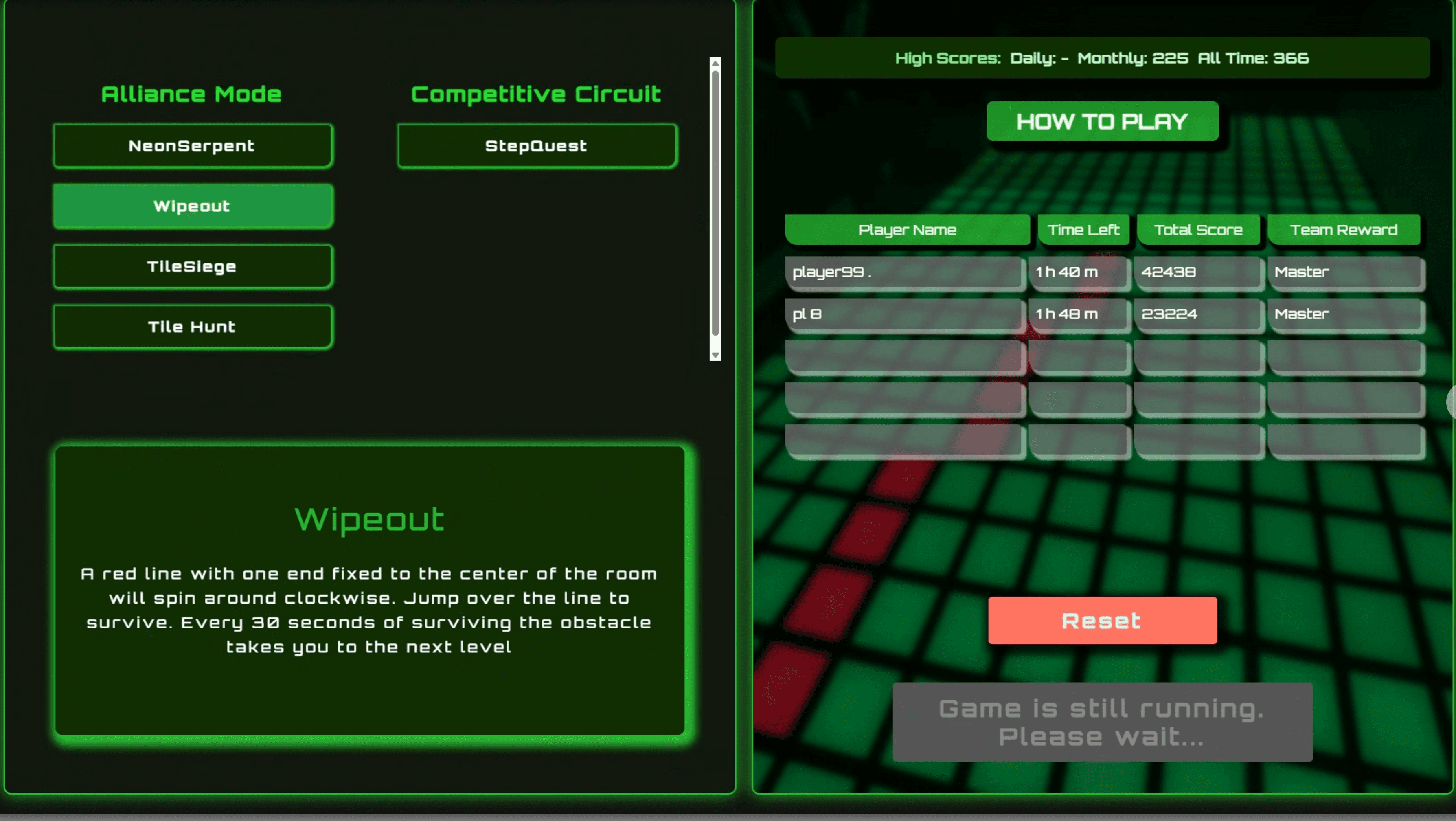
Kiosk Host & Room Control (.NET WebView)

WinForms orchestration layer between the Kiosk UI, Scorecard UI, Game Engine, backend API, and room hardware.

 WCPUS
WCPUS
Game Engine (.NET Console Runtime)
Realtime .NET runtime that launches game variants, manages controller communication, executes game logic, and coordinates restart flow with the kiosk system.
 SRE+1
SRE+1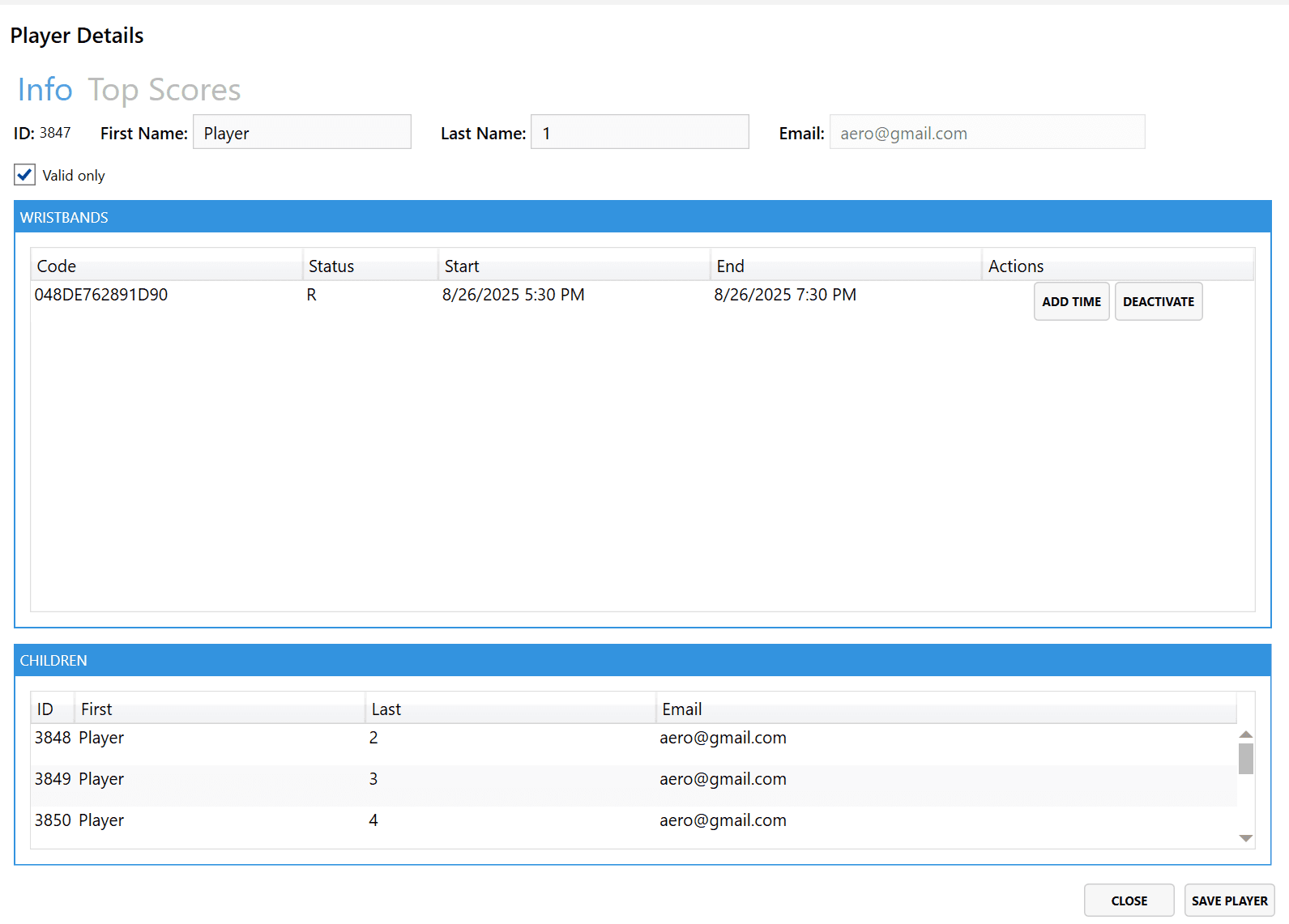
POS & Wristband Management (WPF)
Staff-facing WPF application for initializing, registering, renewing, and managing NFC wristbands and player records through the backend API.
WXNA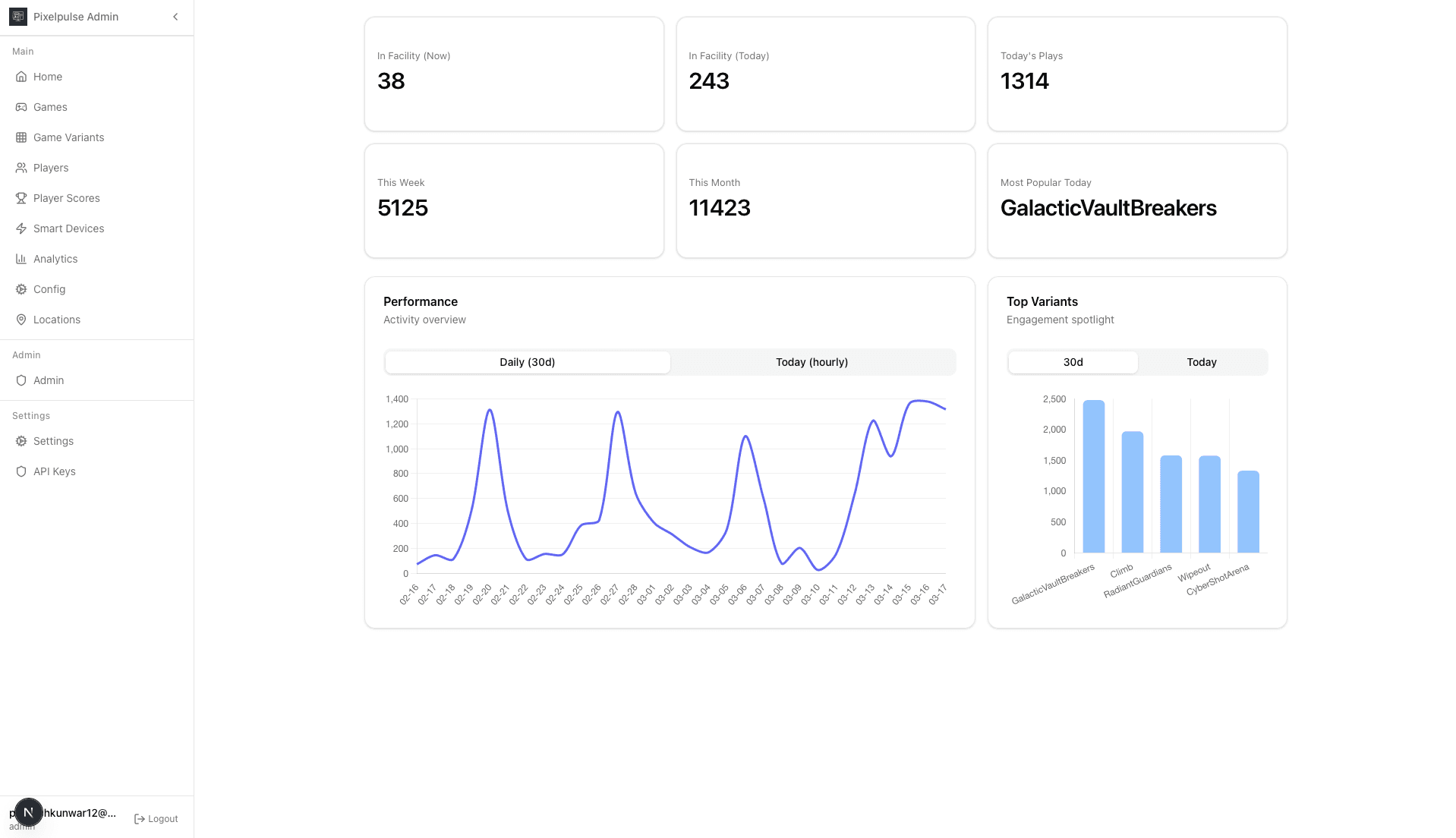
Admin Portal (Platform Control & Analytics)
Centralized web platform for managing games, players, analytics, smart devices, and documentation with authentication and role-based access control.


 JAC/A
JAC/A